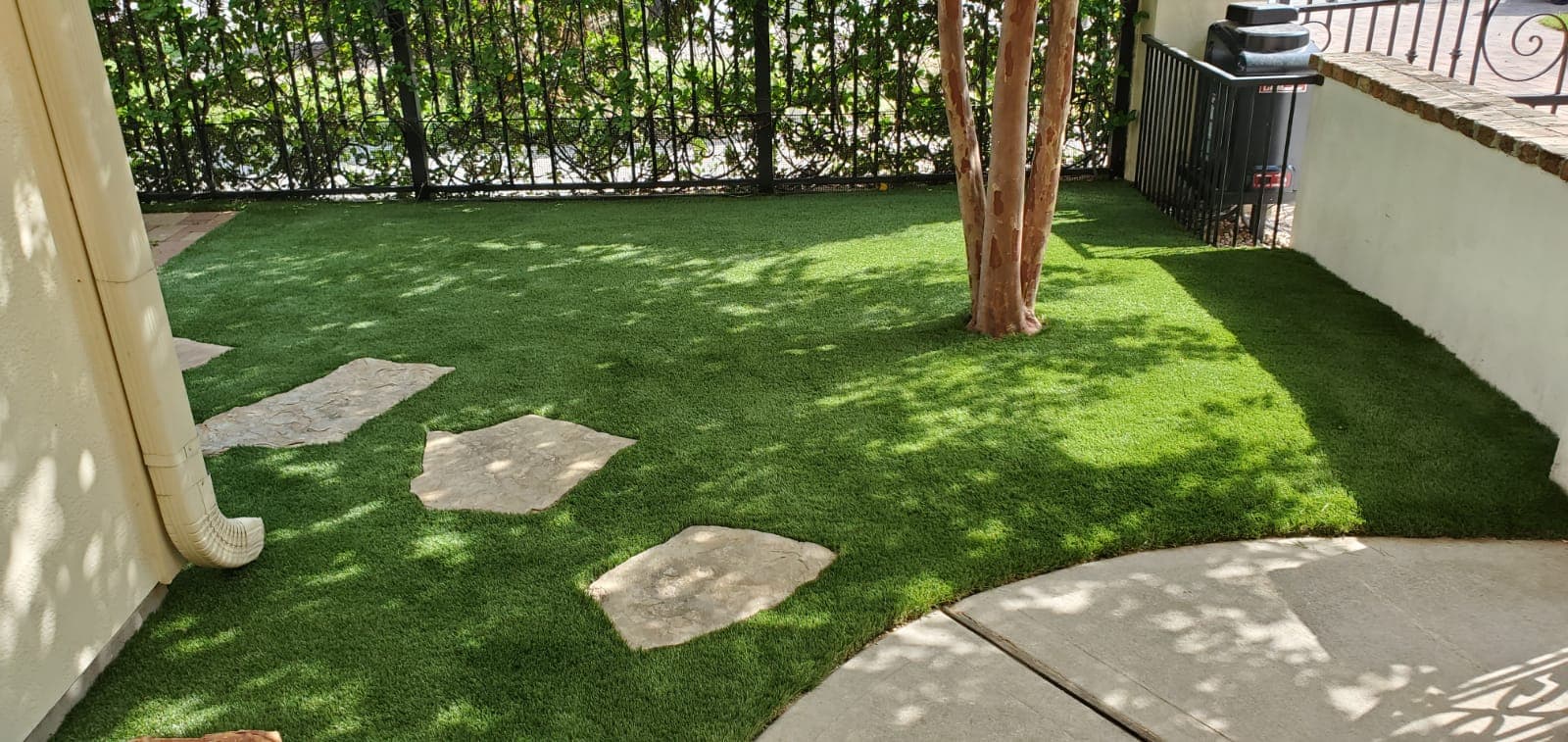
Putting Green Installation in Memphis, Tennessee
Installing a putting green in Memphis is less about “turf selection” and more about getting the base and water management right. The Mid-South stays wet, many yards sit on clay pockets, and drainage problems are often the reason homeowners call in the first place—especially after sod has failed repeatedly.
PuttingGreen.com helps Memphis homeowners and businesses plan putting greens and synthetic turf projects that hold up long-term by matching you with installers who understand Memphis soil, drainage realities, and tight backyard access.
Why Installing a Putting Green in Memphis Is Different
Memphis-area installs commonly deal with overly saturated soils and clay-heavy subgrades that stop water from soaking in. Even if the top few inches look decent, you can hit clay pockets as you dig—trapping moisture in the upper soil layer and creating soft spots that won’t support a stable base.
Memphis is also a tree-heavy market. When trees can’t (or shouldn’t) be removed, the build often needs adjustments so roots don’t warp or damage the turf system over time. In some cases that means building higher, improving sub-base structure, or using specialized components to separate the turf system from problem subgrade conditions.
Memphis Drainage Reality
In the Memphis region, drainage isn’t an “upgrade”—it’s often part of the core build.
Many properties have downspouts dumping roof water into the backyard for years. That water, combined with clay soils and poor grade, is why grass fails and yards stay muddy.
A strong Memphis plan usually includes some combination of:
- French drains or catch basins under turf (when water could be trapped)
- Redirecting downspouts by piping gutters underground and carrying water to appropriate discharge points
- Shaping the project so runoff behaves predictably and doesn’t pond against the house or fences
In practice, a large percentage of Mid-South turf projects end up with drainage work attached, even when the surface “looks flat.”
Base Preparation and “Soft Spot” Fixes
Memphis installs sometimes uncover unstable or pumping soil once excavation begins. When the ground moves like waves under equipment, that subgrade can’t be trusted.
Common stabilization approaches include:
- Removing the bad soil completely and rebuilding with large rock at the bottom, then stepping down to smaller aggregate toward the top
- Treating salvageable subgrade with lime and soil-cement methods to firm the base before building on top
This is one of the reasons Memphis projects can’t be priced or planned like desert markets—subgrade conditions can change once you start demo.
Putting Green Design in Memphis
Memphis homeowners choose putting greens for two main reasons:
- A golf feature that feels like it belongs in the landscape
- A functional solution that replaces a muddy, unusable yard
Morgan’s install style leans toward natural-looking greens that “belong”—greens that look like they were always part of the yard or common area—while still being able to go modern and clean-lined for contemporary homes or commercial spaces.
Common Memphis putting green add-ons:
- Fringe and surrounding chipping areas
- Chipping pads integrated into surrounding turf
- Golf accessories (club holders, hitting nets)
- Lighting and speaker integration (when desired)
Home Styles and How Greens Tie In
Memphis installs often need to match very different architectural styles, including:
- Ultra-modern homes where straighter lines and subtle curves look best
- Older, established neighborhoods with trees and classic Southern landscaping where a tidy green can feel “Augusta-inspired”
- Standard residential builds where the backyard style is defined by the homeowner’s landscape choices (pool setting, English garden look, tropical accents, formal boxwoods, etc.)
The right design approach is to match the green’s lines, transitions, and surrounding landscape to the property’s existing “language.”
Common Mistakes Memphis Homeowners Make
1) Treating drainage as secondary to aesthetics
Beautiful projects fail when the “veins and bones” are wrong—walls placed in the wrong spots, water diverted incorrectly, or grade ignored.
2) Hiring a contractor who isn’t turf-focused
In turf, there’s no universal building code like electrical or plumbing. Results depend heavily on experience and process. Companies that “also do turf” (in addition to many other trades) often lack the specialization needed for clean seams, proper shaping, and base standards.
3) Not verifying past work
A simple test: ask for a portfolio, and ask if you can view an older completed project in person. Reputable installers can usually arrange this.
Turf Choices and Putting Green Performance
Putting green performance is largely decided by:
- Base quality
- Drainage planning
- Turf selection matched to realistic use
For many residential Memphis backyards, texturized (non-slit film) putting surfaces are often appropriate when use is mostly putting + short chips (roughly 10–20 yards). Slit-film systems can make sense when the space and design truly support longer approach shots—but they usually require different construction practices and are better suited to larger practice layouts.
Speed can often be tuned within a practical range so a homeowner can match the feel of the courses they play most often.
Typical Putting Green Sizes in Memphis
Memphis putting greens commonly range from:
- Small, tight spaces: under 200 sq ft (including zero-lot-line yards)
- Common residential: 300–700 sq ft
- Larger properties: up to ~1,000 sq ft+
Most residential greens in the Memphis area come in under 1,000 sq ft.
Best Time of Year to Build in Memphis
Memphis turf work can be done year-round, but schedules can be affected by:
- Spring rain stretches that slow construction
- Occasional winter snow/ice events
Crews may use temporary shade structures for heat, and in rare deadline-driven cases, temporary tarps/rain shelters to push a project through tough weather windows.
Memphis Service Area
Installers serving Memphis often cover a wider Mid-South radius, including: Memphis, Jackson (TN), Paragould (AR), Oxford (MS), Starkville (MS), and the Pickwick Lake area near the TN/MS/AL border.
Ready to Plan a Memphis Putting Green That Holds Up Long-Term?
If your yard stays muddy, your sod keeps failing, or you want a golf feature that looks natural and drains right, the next step is matching with an installer who builds for Mid-South conditions.