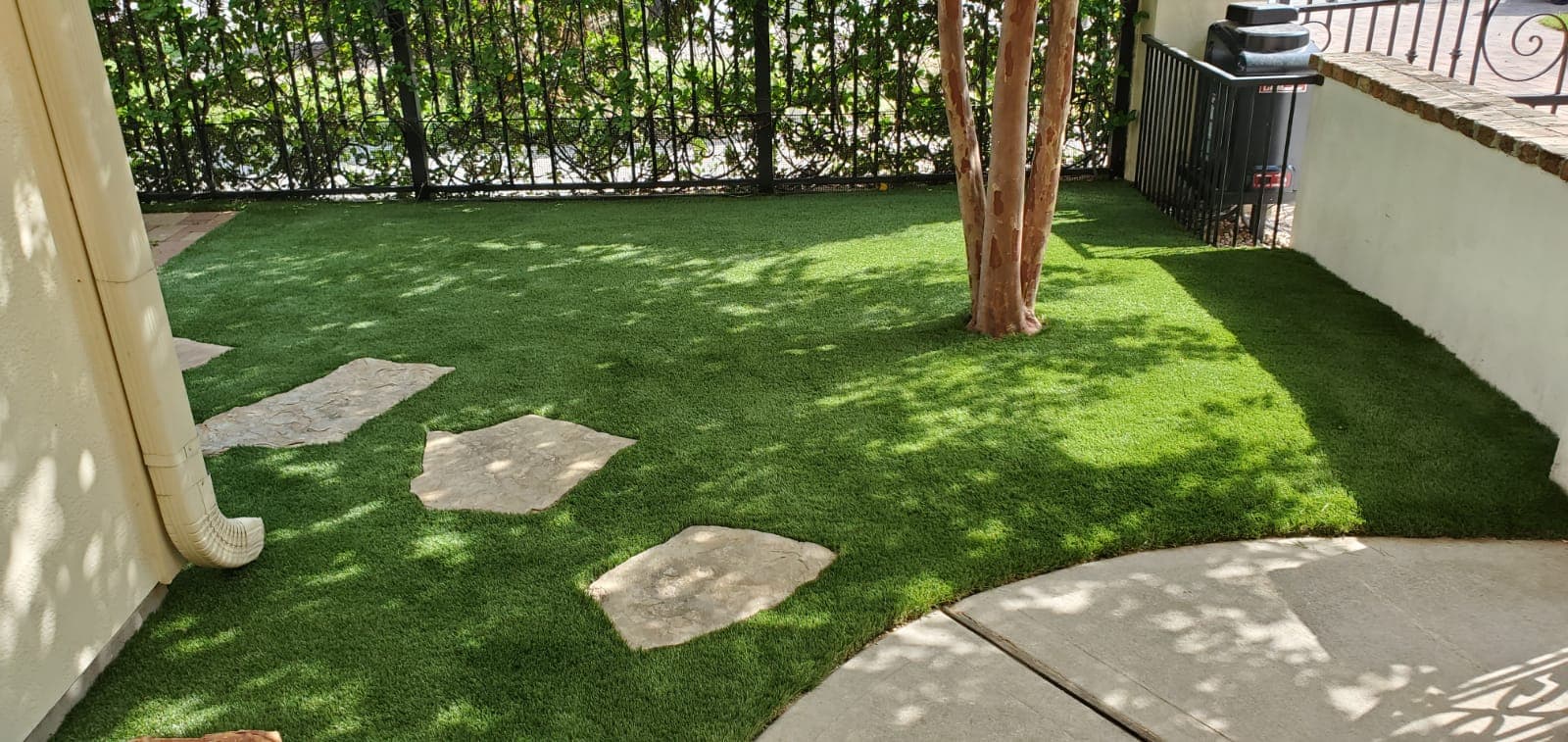
Putting Green Installation in Atlanta, Georgia
Installing a putting green in Atlanta comes with a unique set of challenges that don’t exist in flatter or drier parts of the country. Sloped lots, clay-heavy soil, frequent rainfall, tight access, and local watershed regulations all influence how a putting green or synthetic turf system should be designed and built.
PuttingGreen.com helps Atlanta homeowners, builders, and institutions connect with experienced installers who understand these local conditions and plan projects accordingly — not with cookie-cutter systems, but with site-specific solutions.
Why Installing a Putting Green in Atlanta Is Different
Atlanta sits along the foothills of the Appalachian Mountains, which means very few properties are naturally flat. Most projects involve working uphill, downhill, or across uneven terrain, especially inside the metro area.
- Smaller Yards: Atlanta yards are typically smaller, especially inside the city. A large backyard in metro Atlanta might be 2,000–2,500 sq ft, with many closer to 1,200 sq ft.
- Clay & Drainage: Clay-heavy soil and organic topsoil must be properly removed and replaced with a stable base system before turf installation. The region receives consistent rainfall, which exposes drainage and base-prep mistakes quickly.
- Limited Access: Access is often limited by tight gates, narrow side yards, and elevation changes, making wheelbarrow labor more common than heavy equipment.
These factors mean Atlanta putting greens must be designed with realism and restraint — forcing flatness or overbuilding often increases cost without improving performance.
Common Mistakes Atlanta Homeowners Make
Atlanta’s growing turf market has attracted many new installers, and homeowners are often surprised by how much quality can vary.
Hiring Inexperienced Crews
Some companies sell projects online but subcontract the work to undertrained crews. Seam quality, base prep, and drainage suffer. Always check for experienced, local crews.
Systems That Don't Fit
Many homeowners are talked into huge, sand-filled greens without room to chip. In Atlanta’s wet climate, these can trap moisture and become maintenance headaches.
Ignoring Long-Term Proof
A useful question is whether the installer has projects that are 10+ years old. Longevity matters more than warranties if the company won’t be around to honor them.
Underestimating Access
Tight access and sloped lots increase labor and complexity. Planning around these realities upfront prevents delays and cost overruns.
Atlanta Build Recommendations
- ✓Remove organic soil and clay before building the base — skipping this step leads to settling.
- ✓Use layered stone bases (often blending different aggregate sizes) instead of crushed “run” materials that behave like concrete when wet.
- ✓Design with the natural grade, rather than fighting it. Over-flattening often requires retaining walls and unnecessary expense.
- ✓Plan for wheelbarrow access on most metro jobs and staff accordingly.
- ✓Choose turf systems that match use — shorter-pile, non-directional greens are often easier to maintain in humid conditions.
Putting Green Design in Atlanta Backyards
Most Atlanta putting greens are designed as compact practice spaces, not full short-game complexes. The goal is usability — a space for kids, families, and casual practice.
- Green sizes ranging from 15×30 to 22×30 feet
- Hourglass or teardrop shapes that fit into back corners of yards
- At least one truly flat putt, especially on smaller greens
- Fringe or short chipping grass for light approach shots
- Minimal bunkers (rare in Atlanta residential builds)
Edges, Transitions & Landscaping
In metro Atlanta, most turf edges transition into pine straw, mulch, or natural landscaping.
- Natural cut edges where turf meets pine straw
- Masonry or cobblestone borders in high-traffic courtyards
- Wood nailers for clean, tight edges when needed
Seasonality & Scheduling
Atlanta installations are most active March through June and September through November.
Winter installs are possible, but cold temperatures can cause turf to relax later, requiring stretching. Winter rain can also slow progress.
What’s Possible in Atlanta
When planned correctly, Atlanta putting greens can:
Hold up well in a wet climate
Designed to withstand Atlanta's frequent rainfall without waterlogging.
Drain properly despite clay soils
Engineered base systems that manage water flow even on heavy clay subgrades.
Feel larger than their footprint
Smart shaping techniques that maximize usable playing area in compact yards.
Blend naturally into landscapes
Designs that work with sloped yards rather than fighting against them.
The key is designing for Atlanta’s realities, not copying designs from desert or flatland markets.